Monday, December 19, 2022
New Poetry by Anthony Vernon
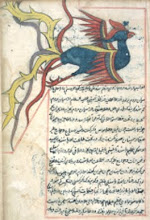
Birds
Terror Birds
Bird songs come from terror
They are screams
And cries of fear
Each note a desperation
Every tune a panic
Melodies are but anxieties
Chirps are but worries
And all flights are frights
As bird songs only come from terror birds
Window Birds
Like a bird to a window
I’ll fly into you now
Thoughts of coming through
Crush dead onto the ground
Found are feathers, blood, and bone
A dying alone
And a cry towards the transparent
But the words aren’t apparent
To a barrier to all but shight
That brings an end to flight
Kite Mountain
Sons are birds
Flying up and over mountains
But not before they breathe their mother’s body
Then their wings are born
And the old lungs are forgotten
And when I flew
You cried til the night
Then in your dreams
You clipped my wings
Keeping me in my cage
Where a bird’s flight is forgotten
- © Anthony Vernon 2022
Anthony David Vernon is a Cuban-American literary writer and master's level philosophy student at the University of New Mexico. He is a regularly published author of poetry along with short stories and philosophical articles in a variety of outlets. His premiere book is The Assumption of Death a hybrid work of poetry, short stories, and philosophical musings.
Thursday, December 15, 2022
New Poetry by Greg Jensen
Loneliness is a Killer
In the small room you rent
several floors above the city
you put two words together
to make conversation.
One word follows
the sound of the other
but just sits there in the room
not explaining like a father
who comes home and stares
deep into the center
of the television.
You put yourself together
and have a day,
instant coffee
and a tinful of tobacco
for company.
Your heart feels
like a hammer
swinging low
after a long day
nailing two words
to keep four walls
from falling down.
When it stabs
you take a small tablet
of nitroglycerine
and swallow another five minutes
of watching the clock.
You hear footsteps
in the hallway,
another door
closing on another
person who rents,
like you, loneliness
for next to nothing.
The cost of living
in this city is high.
You pay to keep
yourself locked up
after years
being locked out.
- © Greg Jensen 2022
Wednesday, December 14, 2022
New Poetry by John Rock
Chrysopeia
if I opened my heart
you'd see children playing in the sand
and the glass cauldron of a sunset
with foxfire beneath it
slow silver swells and a little boy sayin
"I'm a pickle"
and no one listening
this ocean on the edge of ornament
almost metal
almost pure
liquid
the soft blows
of swallows snatching beetles
lifting toward the mountains
- © John Rock 2022
John Rock is a long-time fan and contributor to Bluepepper and organic farm traveler just trying to get at some poetic truths and grow some beautiful food. More poetry, novels and recordings at johnrockpoetry.com
Monday, December 05, 2022
New Poetry by Mark J. Mitchell
Little God Lost
Disguised as art, he slides through the city
like some chess piece left behind when the rules
got drawn up. He sorts every face he sees—
checks or mates. His cracked harlequin mask, blue
under streetlights, can burn red when he needs
passion. He makes confetti notes. Swallows
them without reading. He steals just nothing,
borrowing dropped souls. He’s never allowed
in certain dreams. There are corners his mask
can’t hide, where the voice it uses to sing
is too cold. It cracks lost jewelry—glass,
not precious. He rests. Sleeps on the night bus.
It slides like a rook towards dawn. The last
notes cling to his framed mask. Cool. Safe as dust.
- © Mark J. Mitchell 2022
Mark J. Mitchell was born in Chicago and grew up in southern California. His latest poetry collection, Roshi San Francisco, was just published by Norfolk Publishing. Starting from Tu Fu was recently published by Encircle Publications. A new collection, Something to Be and a novel are forthcoming. He is very fond of baseball, Louis Aragon, Miles Davis, Kafka and Dante. He lives in San Francisco with his wife, the activist and documentarian, Joan Juster where he made his marginal living pointing out pretty things. Now, he’s looking for work again. He has published 2 novels and three chapbooks and four full length collections so far. His first chapbook won the Negative Capability Award.
New Poetry by Paul Ilechko
Anthem
I see your fingers scarred and bandaged
your hands are not the hands belonging to a child
I see your feet the way in which you spin
the angles of your pointing I see the way
in which you fell the silence of it was so very
shocking I see the flowers bursting into color
you were a visitor here this was never going
to be your country you wore the heavy coat
and sang the marching songs your splendid voice
now quiet your face the shade of candlewax
looking upwards in your stiff unportioned aspect
locked into a theory of directionless divinity.
- © Paul Ilechko 2022
Paul Ilechko is a Pushcart nominated poet who lives with his partner in Lambertville, NJ. His work has appeared in a variety of journals, including The Night Heron Barks, Tampa Review, Iron Horse Literary Review, Sleet Magazine, and The Inflectionist Review. His first album, "Meeting Points", was released in 2021.
Tuesday, November 29, 2022
New Poetry by Sam Moe
Fireweed
Late, lilac-infused dawn, pine trees for once
that ridiculous lake into which fall shoes in the summer,
a bird who shares your middle name, rats, combs
covers, gold, mica, plunder dough and the rain
that came at the end of the month and lasted through
the holiday, coated your mailbox in mud and mushrooms,
decay. The obsession of the fawns, your doodles
in the corner of a recipe book, your forgetfulness,
a spoon on the edge of the sink just in case you wanted
to eat the batter again, eggs from someone else’s
chicken, maybe you should leave your windows
open, this isn’t about nerves or apples curved against
copper leaves and a deep sense of abandonment,
this isn’t about the argument or the clover, eucalyptus
in jars, wildflower and buckwheat, how soft the blossoms
were when we gathered them in our hands. False and
vanilla cinnamon, lace down the halls, our friends come
over for dinner, they leave bells in pots, discs with lungs,
ornaments and taffy, marshmallow and too much cream
in coffee, later we’ll lie on the floor. And I’ll spread my
arms in the mist, angelic during evening mist, I’ll tell you
I’m drowning. Everything smells sweet and warm. You think
I’m joking so we both laugh, and you feed me spoonsfuls
of honey.
- © Sam Moe 2022
Sam Moe is the first-place winner of Invisible City’s Blurred Genres contest in 2022, and the 2021 recipient of an Author Fellowship from Martha’s Vineyard Institute of Creative Writing. Her first chapbook, “Heart Weeds,” is out from Alien Buddha Press and her second chapbook, “Grief Birds,” is forthcoming from Bullshit Lit in April 2023. You can find her on Twitter and Instagram as @SamAnneMoe.
Monday, November 21, 2022
New Poetry by Peter Mladinic
Eternal Virgin
Which me do you want? The daughter
watching her father watch the Noh play
in Late Spring, or the widow in Tokyo Story
in a train moving further and further away
from the town, the teacher in a classroom
the young sister-in-law of the widow I
played. The day before my leaving, the girl,
“Is life heartache?” Yes, I told her, yes, it is,
what she hadn’t hoped to hear, her mother
suddenly gone, her father a widower, I
their daughter by marriage, the only one
who opened the door of her heart to them
their final days as husband and wife,
under my roof. Having been shunned by
their own children. Didn’t I look wistful,
smart in my western skirt and blazer
seated in the train? That close up, my eyes.
A person says, I’ve never seen such beauty!
It’s all in my eyes. Setsuko, eternal virgin.
A movie star, I retired early, never married.
In the audience of the Noh play, my father
with the woman he’s to marry. Don’t leave
me, father, I say with my eyes. He and she
watch raptly the masked players.
- © Peter Mladinic 2022
Peter Mladinic’s fourth book of poems, Knives on a Table is available from Better Than Starbucks Publications. An animal rights advocate, he lives in Hobbs, New Mexico, USA.
Monday, November 14, 2022
New Poetry by Simon Christiansen
Lightspeed
Green
I am permitted to move
But I remain at rest
Emerald raindrops glitter in the night
Yellow
From emeralds to nuggets of gold
Engines wake from their slumber
I stand on the yellow brick road
Red
Roar of engines, squeaking of tires
Blood spatter on my coat
Rubies hit the road
Yellow
Grinding of brakes, cessation of movement
I require no transition
I bask in the light from a miniature sun
Green
I am permitted to move
- © Simon Christiansen 2022
Simon Christiansen is a writer and indie game designer living in Denmark. His stories have appeared in anthologies of Danish science fiction, Lackington’s, and Nature Futures. He has also written several award-winning works of interactive fiction. More information about his work can be found at www.sichris.com.
Monday, November 07, 2022
New Poetry by James Kangas
Castle
There’s a blue and pink castle
in the backyard of the house
on the corner. Every day
or two there’s a new inflatable
in that yard: a bounce house,
a water slide, a rocket.
All I need do is look
out my window and I am
transported to a new wonder.
Then in a few minutes
the castle gets deflated
and someone walks over it
to force out the air pockets
before, finally, the folding
and putting away.
- © James Kangas 2022
James Kangas is a retired librarian and musician living in Flint, Michigan. His poems have appeared in Atlanta Review, The New York Quarterly, The Penn Review, Unbroken, et al. His chapbook, Breath of Eden (Sibling Rivalry Press), was published in 2019.
Thursday, November 03, 2022
New Poetry by Anthony Lawrence
Security Measures
In the interests of Personal Safety,
should you encounter behaviour,
objects, or items you consider
to be literature, contact Security,
the Police, the Mental Health
Hotline, or approach any uniform,
including pilots, Quarantine
inspectors or cabin crew,even
carousel sniffer dogs have been
known to sit down beside luggage
containing books by Rupi Kaur.
Please report the following:
a passenger nodding sagely
while reading 'The Complete
John Ashbery’; those who swear
they can find acrostic poetry
on Flight Information boards;
a limousine driver at Arrivals
holding a sign: Lagavulin Lovers
Welcome Geoffrey Hill;
a First Officer introducing
the captain, then giving an update
on conditions in rhyming couplets;
people who are close to coming
to blows over whether
performance poetry translates
well on the page, or those
already throwing punches after
being told the stage is anathema
to any understanding of where
- © Anthony Lawrence 2022
Anthony Lawrence’s most recent book of poems is ‘Ordinary Time,’ a collaboration with Audrey Molloy. His collection ‘Headwaters,’ won the 2017 Prime Minister’s Literary Award for poetry. He is a senior lecturer at Griffith university where he teaches Creative Writing. He lives on Moreton Bay.
Wednesday, November 02, 2022
New Short Fiction by Nina Alonso Hathaway
My little sister’s chalk-drawing on the sidewalk, runs inside crying because Marjie from up the street prayed Jesus into her heart, “Get him out?” Mom manages a Jesus-ectomy, later says Marjie asked my brother why he killed Jesus.
“Ignorant,” she says, shaking her head, “Never heard of Pontius Pilate, no idea Jesus was Jewish,” glad they’re not burning crosses or aiming guns.
No Asians in my high school, one African American boy cheered on the football field who dates a Jamaican girl from the next town. My classmate Sandra’s dad is Jewish, but her mom’s Catholic, so they have some sort of compromise tree. Locals are mostly Protestant, afloat in a bigoted bubble as if theirs is the only true path.
Dining at Spring Moon we get to know the Moys, and I babysit their girls. Ruth gives me a cheongsam, green silk, which I wear to a party, friends squinting as if I’ve turned into multiple kinds of ‘other.’
One evening four year old Denise is poking her rice, two year old Debbie’s too sleepy to eat. I hear buzzing, notice the liter bottle of Coke on the fridge jiggling, then it explodes spraying soda and bits of glass. I carry screaming kids from the room, glad no one’s hurt, call Ruth,“We’re okay, but the kitchen’s a mess.”
“Read stories, put them to bed. I’ll clean up later.”
George drives me to Riverview, as I’ve got a license but no car, over-explaining what I’ve already figured out, “Refrigerator vibration shook the bottle, carbon dioxide bubbles blew it up like a volcano in chemistry class.” He’s a freshman at Harvard, planning to be a doctor like his father who died of a heart attack when he was nine. My pharmacist dad studies George’s thick glasses, his lanky frame, watches him sneeze into his handkerchief, later says, “He’s not a good specimen,” as if rejecting a dubious lab sample.
I’m reading about the Holocaust, concentration camp photos, skeletal survivors, Auschwitz. Mom says, “Auntie lived in Warsaw with cousins, but letters stopped coming, meaning Nazis murdered them.
I have college acceptances, but money’s tight so choose the piano scholarship at Boston Conservatory. The front desk provides keys to practice rooms, usually a cranky spinet in an airless basement cubicle, walls so thin there’s no way to avoid hearing violins sawing away, voices crawling up and down scales. By November playing piano five hours a day feels like classical music prison, my wrists stiff and aching. My friend Dee says ‘hang in there,’ but the doctor labels it ‘tendonitis, overuse syndrome,’ and orders rest. My teacher, Anton Moeldner, student of Paderewski, encourages me, but the pain’s worse. I love piano, hate disappointing him and giving up my scholarship, but have to accept that whatever I’m supposed to be doing, this isn’t it.
“Sometime things happen we can’t understand,” Mom says, as she’s loved hearing me play since I was six.
I meet a friend for coffee, fine until he starts discussing Freud. No idea who that is, and too embarrassed to admit ignorance, I say, “Getting late,” and leave. At the conservatory I studied classical piano, ballet, Italian, English composition taught by a charming actor, music history and theory, no composers named Freud. That spring I work at a department store wearing the required ugly turquoise blouse, only excitement a robbery in ‘fine jewelry,’ security guards knocking over displays, alarms blaring, police blowing whistles.
September, lucky to receive a full scholarship at Simmons, I start reading George Eliot, Gertrude Stein, Alfred North Whitehead, Jane Austen, T. S. Eliot, Dostoevsky, Freud and all the rest. Can’t afford a dorm, so take the bus until invited to live with my friend Heather and her mom in Cambridge.
In high school George’s big hands poked under my sweater, but now the guideline’s ‘don’t get pregnant.’ Virginity lasts until Sam, tall, brown-eyed Harvard Law, eager to elope. Why do I agree, repeat words that mean nothing in front of a justice of the peace, move to DC with him after graduation?
It’s about being horribly young, afraid no one more exciting will ask, soon sorry because Sam’s emotionally blank, bossy and boring, the sex dismal. I don’t love him, he doesn’t love me. One night he admits he was in love with a Harvard law student, black, from South Africa, but his parents threatened to cut him off financially unless he ended it, so he did, then finds me, a white, parent-acceptable female. “Still in love with her?” No answer, says it’s my problem if I feel used.
I try a psychotherapist, an owlish type with round glasses and argyle socks who jots notes on green-lined paper, but says nothing, even when I announce I’m leaving Sam and DC, just his usual,’See you next time.’ Did he hear anything? Hell, no.
I’ve saved money for a plane ticket, grateful to crash on my friend Heather’s couch in Cambridge, depart without telling Sam, no goodbyes, as I’ve given up on him, glad he’s busy at his Securities and Exchange Commission office. Later he blames my ‘emotional issues,’ easier than looking in the mirror.
Divorced by twenty-two, I’m angry at myself for legalizing this stupid episode. Why didn’t I see through the situation sooner? I watch other friends marry, figure they made better decisions, seem happy with their cute babies, until they confide about counseling sessions and break ups. My best friend Heather gets divorced and moves to Australia with her six year old. My brother Carl stays married, and my friend Jane, but my sister calls a lawyer when her husband declares himself ‘out’ and joins a gay chorus. It’s a relief that it wasn’t just me who didn’t know what in hell I was doing.
I find an attic flat in a Cambridge three-decker, lucky to have a grad school fellowship at Brandeis and a Mom who helps with groceries. At Cafe Pamplona I meet Fernando, born in Argentina, who says his family fled Peron when he was seven, settled in the states where he spent school days playing pick up sticks as he knew no English. When I can’t get my VW Bug going, he gives me a ride in his old rust-cracked Chevy. I tell him everything, even what felt stultifying, painful and wrong, struggling to accept that’s just what it was.
He’s the first man I’ve met who listens, doesn’t criticize, doesn’t judge, doesn’t comment on how I dress, doesn’t tell me what to do, doesn’t pressure me, doesn’t have an invasive ego agenda, the first time I feel safe.
His touch is gentle and sensitive, though it’s a while before we call it love, no single star-shine moment, more like a seed taking time to grow. We live together, feel no need to change ourselves or each other because, somehow, we’re okay as we are.
- © Nina Alonso Hathaway 2022
Nina's work has appeared in The New Yorker, Ploughshares, U. Mass. Review, Writing in a Woman’s Voice, Black Poppy Review, Bluepepper, Peacock Journal, Ibbetson Street, Bagel Bards Anthology, Constant Remembrance, MomEgg, New Boston Review, Cambridge Artists Cooperative, Muddy River Poetry Review, Wilderness House Literary Review, Tears and Laughter, Southern Women’s Review, Broadkill Review etc. David Godine Press published my book This Body, Cervena Barva Press published Riot Wake, and a story collection and novel are in the works.
Tuesday, November 01, 2022
New Collaborative Poetry by Carson Pytell and Zebulon Huset
A Light Year of Nostalgia *
Lingering in the toy aisle
for decades
Just another toy's story
with no kid
and a concept of time
alien to us
which the wise don't call
forever
they just let gravity continue
to drag us along
into the black hole we call
the light, "run"
the call of those not yet at
the event horizon
yet having always headlined
our own matinee—
A consumer generation waiting
to buy-in.
- © Carson Pytell & Zebulon Huset 2022
Carson Pytell is a writer living outside Albany, New York, whose work appears in such venues as The Adirondack Review, Sheila-Na-Gig, Fourth River, and The Heartland Review. He serves as Assistant Poetry Editor of Coastal Shelf, and his most recent chapbooks are Tomorrow Everyday, Yesterday Too (Anxiety Press, 2022), and A Little Smaller Than the Final Quark (Bullshit Lit, 2022)
Zebulon Huset is a teacher, writer and photographer. His writing has appeared in Best New Poets, Meridian, Rattle, The Southern Review, Fence, Texas Review and Atlanta Review among others. He also publishes the writing prompt blog Notebooking Daily, and edits the literary journal Coastal Shelf.
* [This piece is from a collaborative poetry project called “Stanza Trades”. In the Stanza Trades series the collaborating poets write alternating stanzas.]
Monday, October 31, 2022
New Poetry by Lynn White
Clock Wise
They were traditional
retirement gifts
after a long working life.
I never understood.
Perhaps the first time
it was given in irony,
an employer with a quirky sense of humour,
but then it caught on and became traditional.
I remember the one given to my father.
It was brown
all brown
with cream numbers and fingers.
It sat dismally on our mantelpiece
ticking away morosely
long after his death.
As I child I used
the glass as a mirror,
a smiling face, a funny face,
or a gurning face.
My faces livened it up a bit
but I left it behind
when mother died.
- © Lynn White 2022
Lynn White lives in north Wales. Her work is influenced by issues of social justice and events, places and people she has known or imagined. She is especially interested in exploring the boundaries of dream, fantasy and reality. She was shortlisted in the Theatre Cloud 'War Poetry for Today' competition and has been nominated for a Pushcart Prize, Best of the Net and a Rhysling Award.
Monday, October 24, 2022
New Poetry by Andrew Kidd
The Ghost of Liparis Loeselii at Crymlyn Burrows
Bunting out of this purpled, boggy heath
are grasses that fence small pools
stagnating and snaking to pull in
saltwater that marsh to amass
as black-surfaced mirrors.
Inside these, the fiery, wide-lipped glow
of twayblade and tresses
ghost to illuminate this darkening sandpile,
all trodden and trampled upon
by the industrious boot that giants across the river.
Water ripples trickle out repeatedly
to sequins and glitter like eyelid-flicker
leading down to a place where meadow pipits skirt
along Brunel's old harbour wall.
Reflected in the face of the water
is an apparition in a clear-sighted clearing,
yellowed like gorse, part-illuminated
by sparks that anvil across.
- © Andrew Kidd 2022
Andrew C. Kidd has had poetry and flash fiction published in Elsewhere: A Journal of Place, Friday Flash Fiction, Journal of the American Medical Association, Green Ink Poetry and Soor Ploom Press.
Sunday, October 23, 2022
New Poetry by Lydia Pejovic
Wild horse rights advocates say:
leave the hoofprints in the dirt. If we
continue to sweep away the remnants
of what stepped here yesterday, or last
century, or tomorrow, what can we make
of walking patterns or the weather? Think
about the recent rains that washed away
red dirt and anthills. What would we do
without knowledge of a natural cleanse?
We would think that someone wiped away
the hoofprints, or worse yet, someone took
the horses and domesticated them and cut
their hooves into new shapes, so that they
could decorate the land in different, more
controlled, ways.
hit lock
he puts the car key in his mouth and hits “lock” / we’re a distance from his car but / i hear a horn down the garage / he tells me that an open mouth amplifies range / and locks the doors from afar / it’s science, baby, he says / i want to put the keys on my tongue / i want to give him the back of my throat / and let my uvula become his punching bag / the range that we could create / would be a wide wide chasm / almost as large as the space / between the past versions of us / it is selfish for him to break / the rules of distance / things shouldn’t work in certain ranges / for certain reasons, yet / he finds ways to extend himself / far and deep inside / past any existing laws or ideas / that i believed to be true
- © Lydia Pejovic 2022
Lydia Pejovic is a writer, lecturer, and current dual English MA/MFA student at Chapman University. She received her BA in English from the University of San Diego. She writes both fiction and poetry. Check her out at https://www.lydiapejovic.com/.
Thursday, October 20, 2022
New Poetry by Jason Beale
Common or Indian Myna
They're a favourite of suburban poets
lazily in need of some local colour,
even though they're an interloper, a pest,
and not as lovely as the noisy miner.
Cheeky little buggers in dark Zorro hoods
with the feral stealth of true survivors,
they’re hated for driving out native birds
but in India a symbol of faithful lovers.
Every day I watch them on our lawn,
peck-pecking away at invisible prey,
bugs and beetles, a worm now and then.
They hang around the back door too,
staking out the dog's bowl, hoping to score,
like Heckle and Jeckle meets Bill and Ben.
Common mynas live at breakneck speed,
always dodging magpies, cats and cars,
often found deceased on bitumen or asphalt,
sometimes hopping in and out of poets’ dreams.
- © Jason Beale 2022
Jason Beale is a writer who lives in the southeast suburbs of Melbourne. His poems have been published in Meniscus, Grieve Vol 10 and Poetry d’Amour 2022.
Monday, October 17, 2022
New Prose Poetry by Heather Sager
Snowflakes Falling
With the look of winter, you emerge from the front door of a house. You are young, and your eyes sparkle with curiosity. I say you look of winter because of your black top hat, your black coat, and because your eyes tilt to the gray and white sky. You whistle as you walk onto the sidewalk along the curb. Other people hibernate in their homes. You are all alone. White snow blankets the ground everywhere, and patches of snow drift across the path you head onto, marching quickly. Bare, small trees hunker under pale fluff. The metal park-bench near the weeping willow glowers metallic black. Out in the evergreen-scented air, winter snow flakes fall as delicately patterned as spiral lace onto your shoulders, and also wetly blur your vision. You pull the neck of your coat up to warm yourself. Now you feel as cozy as the folks you imagine lounging indoors. Next the images of the movie you plan to make glimmer in your mind. You intend to make something magical, with a special effect or three—a film that will cause viewers to stop in their life’s tracks and say, “Oh My.” You want to craft a movie about rare humans who live on the moon. Who live in style. The snow reminds you of a painter’s canvas. The images of your film-dream are set in motion.
You are out walking in winter, the snowflakes gently falling.
- © Heather Sager 2022
Heather Sager lives in Illinois where she writes poetry and fiction. Her writing has recently appeared in Remington Review, Bluepepper, Poets' Espresso Review, Poetry Pacific, Flights, The Fabulist, Otoliths, Magma, and more journals and anthologies.
New Poetry by JD DeHart
If I Had Only One Pen
I would write your story large,
of living by the railroad tracks,
mother gone too young,
father hunched up in tradition,
and pain,
a back injury, coal dust spelling
your future with dried fingers.
A husband who would
crawl under trains. Sons who
would live most comfortably
among trees and beside springs,
listening to the voices of creeks,
wisdom spilling like water
like the pounds, even tons
of care you give.
- © JD DeHart 2022
JD DeHart is a writer and teacher. His most recent poetry collection, A Five-Year Journey, is available from Dreaming Big Publications.
Sunday, October 16, 2022
New Poetry by Abigail George
The Psychologist
Her kids are American. In pictures
they draw in kindergarten
they have spaghetti meatballs
for heads. Her life is Americana.
She speaks with an accent.
On the phone in clipped American
tones. Saying ‘yeah’ at the end
of her sentences. By now she
probably believes in thanksgiving,
turkey and reality television.
She does not read Bessie Head,
Joyce Carol Oates, Lauren Beukes.
Andre Brink. I don’t think she’s
ever heard of Ingrid Jonker.
Perhaps my cousin did a poem of hers placed
in the curriculum in matric. That love affair
inspired me. I wanted to write like him.
Poems like Ingrid Jonker.
All the psychologist wants is to talk.
For me to talk about me.
The sad, lyrical, beautiful diagnosis.
And that is the last thing I want.
- © Abigail George 2022
South African Abigail George has been nominated for a Pushcart Prize ("Wash Away My Sins"), and Best of the Net awards for her poetry and an essay. She is a blogger, lyricist, editor, filmmaker, playwright, poet, essayist, chapbook, novelist, novella, grant, and short story writer. She briefly studied film at NFTS (Newtown Film and Television School) in Johannesburg. She was educated in Port Elizabeth, and Swaziland. She is the Contributing Editor for African Writer, and an editor at Mwanaka Media and Publishing. She writes op-ed pieces for local newspapers, and has written columns for national travel magazine. Her latest books are "The Scholarship Girl: Life Writing", "Parks and Recreation", "Of Smoke Flesh and Bone: Poems Against Depression" (Mwanaka Media and Publishing), and "Anatomy of Melancholy" (Praxis), a chapbook which was released in 2020. Her latest book is Letter to Petya Dubarova released by Gazebo Books (Australia). Her publishers are Tendai Rinos Mwanaka, Xavier Hennekinne and Roxana Nastase.
Subscribe to:
Posts (Atom)